
Cart
Cart is empty
Total:
0,00 €
Cart is empty
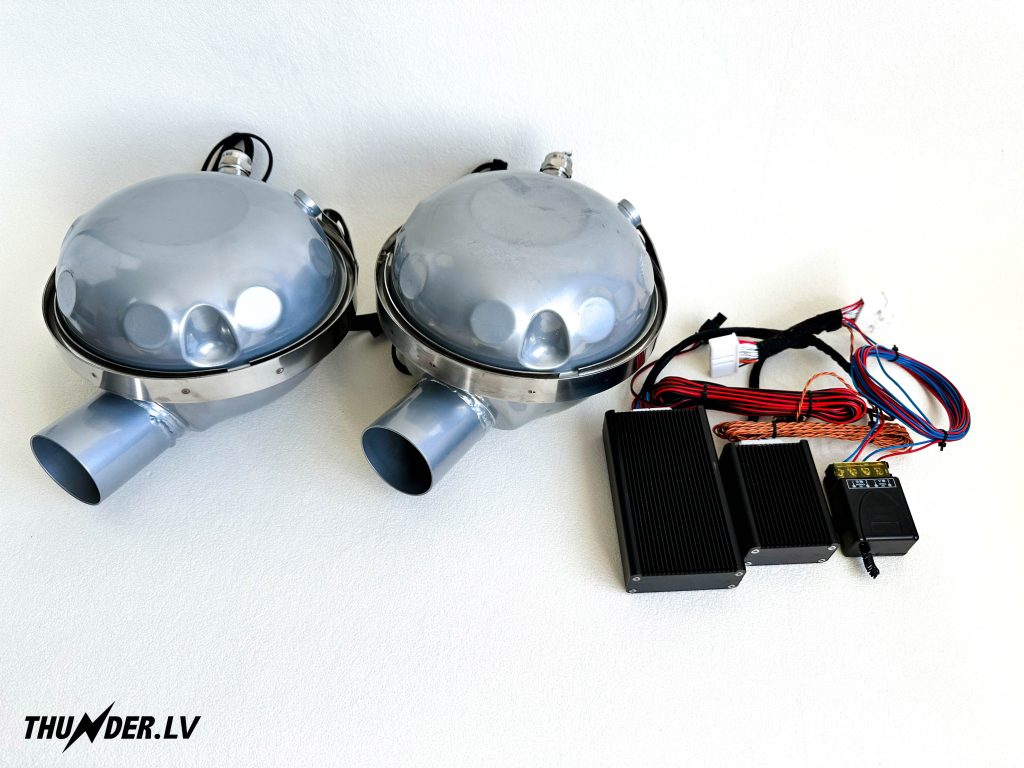
This real-world example of installing the Thunder active electronic exhaust system demonstrates how you can radically change the sound and appearance of a car. The owner of a facelifted BMW X5 E70 with a 3.0-litre diesel engine set us two tasks: to achieve the noble sound of a petrol V8 and to bring the rear end appearance in line with the top petrol versions.
Before diving into the technical details, watch how this BMW X5 E70 sounds after installing the Thunder system:
Installing the active exhaust system on the BMW X5 E70 required removing the rear bumper to gain access to the sound generator mounting location. This is a standard procedure that allows the work to be done neatly and professionally.
The Thunder sound generators were installed in special niches behind the bumper — on the left and right. This positioning ensures optimal sound distribution and protects the generators from external influences.
The connection of the system's electronic components was carried out taking into account the vehicle's standard wiring:
The car owner set an ambitious goal — to convert the rear end to match the appearance of the top petrol E70 models with the 4.8-litre engine. This required replacing the standard round exhaust tailpipes (typical for diesel versions) with oval, chamfered ones — so-called "diamond-shaped" tailpipes.
An important point: The owner categorically refused to install cheap Chinese oval tailpipes. Reasons:
It was decided to use an original BMW retrofit kit consisting of:
The exhaust conversion process:
Installing the new oval tailpipes required modifying the rear bumper:
Result: The rear of the vehicle is visually indistinguishable from the top petrol version of the BMW X5 E70 with the 4.8-litre engine.
Below is a photo of the car after all work was completed:
This installation example is interesting because it demonstrates a comprehensive approach to car tuning:
The owner of this BMW X5 E70 considered various options for changing the exhaust sound:
The choice was made in favour of Thunder, and the result exceeded expectations — the car acquired exactly the "high-quality" sound the owner wanted.
For professionals and those interested in the technical side, here are the details:
This project clearly demonstrates that the Thunder active electronic exhaust system is not just a "squeaker" in the boot, but a full-fledged tuning solution that can be integrated into a vehicle with high installation quality and attention to detail. Combined with visual enhancements, the result is impressive — the car is transformed both in sound and appearance.
If you want to carry out a similar project on your car or have questions about installation — contact our managers. We will help you select the right kit and recommend a trusted installation centre in your region.
This site uses cookies to improve your user experience and optimize its performance. By continuing to use this site, you agree to the use of cookies on www.thunder.lv.